
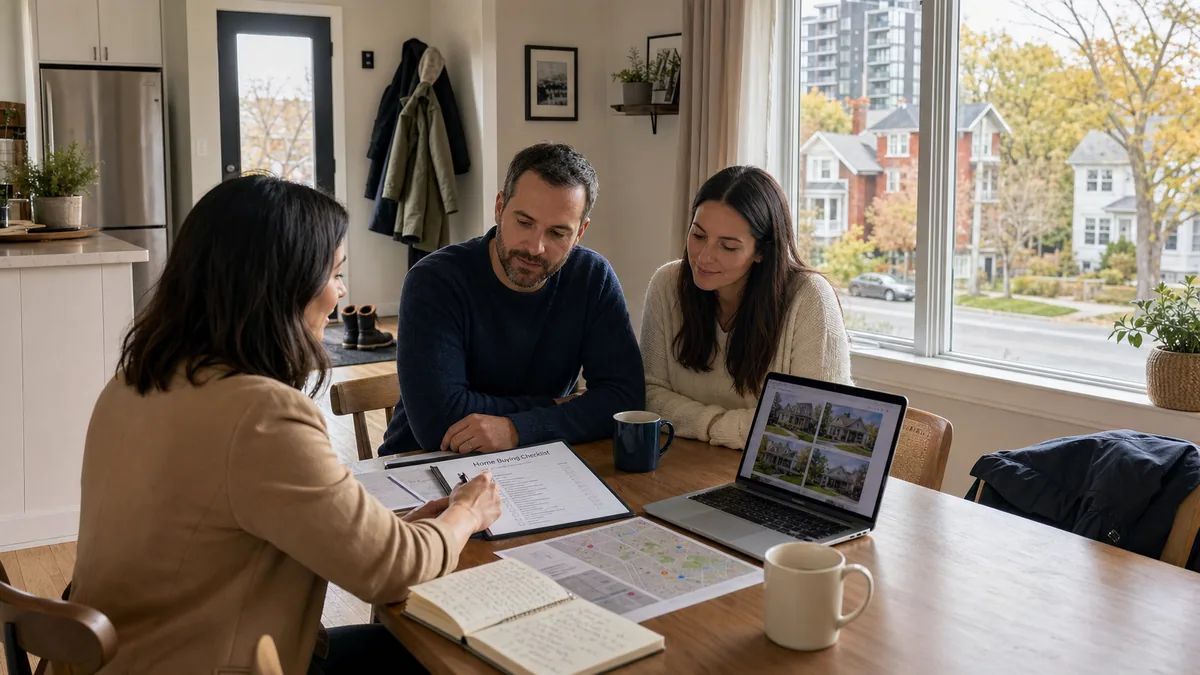
Buying a home in Ottawa is not just about finding the right number of bedrooms. The right strategy depends on what you are buying, where you are buying, and how competitive that part of the market is when you start looking.
A downtown condo, a Barrhaven townhome, a Kanata detached home, an older property in Alta Vista, and a rural home outside the city can all require a different approach. The financing may look similar on paper, but the inspection risks, offer strategy, closing costs, and long-term considerations can be very different.
This guide walks through the Ottawa home buying process in plain language so you can make better decisions before you fall in love with a property.
Quick Answer
To buy a home in Ottawa, start with a mortgage pre-approval, define your budget beyond the purchase price, choose neighbourhoods that fit your lifestyle, tour homes with a clear checklist, review comparable sales, make a well-structured offer, complete your conditions, and prepare for closing costs. The smartest buyers do not just ask, "Can I afford this home?" They ask, "Is this the right home, in the right area, with the right risks, at the right price?"
Step 1: Get Clear On Your Real Budget
Your maximum mortgage approval is not always your best buying budget.
Before you start touring homes, get a mortgage pre-approval and understand the monthly cost of ownership. That means looking beyond the mortgage payment.
Your real budget should include:
- Mortgage payment
- Property taxes
- Home insurance
- Utilities
- Condo fees, if applicable
- Maintenance and repairs
- Commuting costs
- Closing costs
- Moving expenses
- Emergency savings after closing
In Ottawa, this matters because housing costs can vary widely by property type. A newer suburban townhome may have lower immediate repair costs than an older central home, but it may involve a longer commute. A condo may have a lower purchase price than a freehold home, but the monthly condo fee can change the affordability calculation.
The goal is not to spend as much as the lender allows. The goal is to buy a home you can comfortably own.
Step 2: Decide What Kind Of Ottawa Buyer You Are
Ottawa has several different buyer profiles, and each one should shop differently.
First-time buyers often prioritize affordability, transit, and getting into the market without taking on too much risk. Move-up buyers may need more space, better schools, a different commute, or a home that can work for the next decade. Relocation buyers often need to learn the city quickly and compare areas by lifestyle, schools, and commute patterns. Downsizers may want less maintenance, better walkability, or a bungalow or condo that fits long-term living.
The clearer you are about your buyer profile, the easier it is to make good tradeoffs.
For example, if you are a first-time buyer, a smaller freehold townhome in the suburbs may offer more long-term control than a central condo, but it may come with different commuting needs. If you are moving from Toronto or another major city, Ottawa may feel more affordable in some areas, but that does not mean every home is good value.
Step 3: Choose Neighbourhoods Before You Choose Homes
In Ottawa, neighbourhood choice can matter as much as the house itself.
A similar-looking home can live very differently depending on the area. Think about your daily routine, not just the listing photos. Where will you work? How long is the commute in winter? Do you need transit? Schools? Parks? Walkability? A garage? Space for relatives? Access to highways?
Popular Ottawa buyer areas often include:
- Westboro and Wellington West for walkability, shops, and central lifestyle
- Hintonburg for character, restaurants, and urban access
- The Glebe and Old Ottawa South for central living and established streets
- Alta Vista for larger lots, mature neighbourhoods, and hospital access
- Kanata for tech workers, families, schools, and suburban space
- Barrhaven for family homes, newer communities, and relative affordability
- Orleans for east-end value, family amenities, and French-language services
- Riverside South and Findlay Creek for newer construction and growing communities
- Carleton Place, Russell, Rockland, Kemptville, and other nearby communities for buyers considering more space outside the urban core
There is no single best Ottawa neighbourhood. There is only the best fit for your budget, lifestyle, timeline, and risk tolerance.
Step 4: Understand Property Types
Ottawa buyers usually compare a few main property types: condos, townhomes, semi-detached homes, detached homes, and rural properties.
Each one has pros and cons.
Condos can be a good fit for buyers who want lower maintenance, central locations, or a lower entry price. But you need to review the condo corporation carefully, including fees, reserve fund, rules, and any special assessments.
Townhomes often offer a practical balance of space and affordability. In Ottawa suburbs, they are common among first-time buyers and young families. You still need to look carefully at layout, parking, noise transfer, yard space, and future resale appeal.
Detached homes offer more privacy and control, but they usually cost more and require more maintenance. Older detached homes can be beautiful, but buyers should budget for updates.
Rural properties require a more specialized review. Wells, septic systems, zoning, insurance, internet access, road maintenance, and commute time all matter.
Step 5: Tour Homes With A System
It is easy to get distracted by staging, paint colours, and furniture. Good buyers look past the presentation.
When touring homes, pay attention to:
- Roof age and visible wear
- Foundation cracks or moisture signs
- Grading and drainage around the house
- Window condition
- Electrical panel and visible wiring concerns
- Plumbing age and water pressure
- Heating and cooling systems
- Insulation and drafts
- Basement odours or staining
- Layout and natural light
- Noise from roads, neighbours, or mechanical systems
- Parking and snow storage
- Renovation quality
Ottawa homes also need to be considered through a four-season lens. A driveway that looks fine in July may be awkward in February. A basement that seems dry during a showing should still be evaluated for drainage risk. A beautiful older home may need expensive upgrades that are not obvious in listing photos.
Step 6: Review Comparable Sales Before Offering
The asking price is not the same as market value.
Before making an offer, look at comparable sales. The best comparables are recent, nearby, and similar in property type, size, condition, lot, and features.
For example, a renovated detached home on a quiet street should not be compared too heavily with an unrenovated home on a busier road. A freehold townhome should not be valued the same way as a condo townhome with monthly fees. A bungalow with a finished basement may appeal to a different buyer pool than a two-storey home with the same square footage.
Comparable sales help answer three important questions:
- Is the asking price reasonable?
- How much competition is likely?
- What offer structure gives you the best chance without overpaying?
Step 7: Build A Smart Offer
An offer is not just about price.
In Ottawa, a strong offer may include:
- Purchase price
- Deposit amount
- Closing date
- Financing condition
- Inspection condition
- Insurance condition, when appropriate
- Sale of property condition, if needed
- Inclusions and exclusions
- Rental item review
- Status certificate condition for condos
In a competitive situation, some buyers feel pressure to remove conditions. That can sometimes win the house, but it also increases risk. The right decision depends on the property, market conditions, your finances, and how much due diligence can be done before the offer.
The best offer is not always the highest offer. Sellers also care about certainty, timing, deposit strength, and clean terms.
Step 8: Complete Your Conditions Carefully
If your offer is accepted with conditions, the conditional period is your time to verify that the purchase makes sense.
Common conditions include financing, inspection, insurance, and condo status certificate review.
During this stage, move quickly. Your lender may need documents. Your inspector may need access. Your lawyer may need time to review condo documents. If you are buying a rural property, septic and well review may require additional coordination.
This is not the time to coast. It is the time to confirm that the home is what you believed it was when you made the offer.
Step 9: Prepare For Closing Costs
Closing costs can surprise buyers who only focus on the down payment.
Ottawa buyers should budget for:
- Ontario land transfer tax
- Legal fees and disbursements
- Title insurance
- Home inspection
- Appraisal, if required by the lender
- Property tax and utility adjustments
- Condo status certificate review, if applicable
- Moving costs
- Insurance
- Immediate repairs or setup costs
First-time buyers may qualify for a land transfer tax rebate, depending on eligibility. Because rules and amounts can change, confirm current details with your lawyer or mortgage professional before relying on a rebate in your budget.
Step 10: Do A Final Walk-Through
Before closing, buyers often complete a final walk-through. This is your chance to confirm the home is in the expected condition and that agreed inclusions are still there.
Check:
- Appliances included in the agreement
- Fixtures and chattels
- Visible damage
- Cleanliness expectations, if addressed
- Heating, cooling, plumbing, and electrical basics
- Any agreed repairs
If something is wrong, your lawyer and agent can help determine the right next step.
Common Mistakes Ottawa Buyers Make
One common mistake is shopping before getting pre-approved. This can lead to disappointment or rushed decisions.
Another is focusing too much on the house and not enough on the area. A beautiful home in the wrong location may not fit your life.
Buyers also sometimes underestimate maintenance. This is especially true with older homes, larger properties, and rural homes.
Some buyers overreact to cosmetic issues while missing expensive structural or mechanical concerns. Paint is easy. Foundation repairs, roof replacement, electrical upgrades, and drainage problems are not.
Finally, some buyers wait for a perfect home that may not exist. The better question is whether a home fits your most important needs and can be improved over time.
Ottawa Home Buyer Checklist
Before you make an offer, ask:
- Does this home fit our real monthly budget?
- Do we understand the neighbourhood?
- Have we reviewed comparable sales?
- Do we know the likely repair and maintenance needs?
- Are there any inspection concerns?
- Are there condo documents to review?
- Is the commute realistic?
- Does the layout work for daily life?
- Are we comfortable with the offer terms?
- Would we still feel good about this home six months from now?
FAQ
How long does it take to buy a home in Ottawa?
Some buyers find a home within a few weeks, while others search for several months. The timeline depends on your budget, neighbourhoods, property type, and how much inventory is available.
Should I buy first or get pre-approved first?
Get pre-approved first. It helps you understand your budget, move quickly when the right home appears, and avoid falling in love with a property that does not fit your financing.
Are home inspections still important in Ottawa?
Yes. Inspections are especially important for older homes, rural properties, renovated homes, and properties with visible maintenance concerns. In competitive markets, buyers may need to discuss inspection strategy before offering.
What is the biggest mistake first-time buyers make?
Many first-time buyers focus on purchase price but underestimate monthly ownership costs, repairs, and closing costs.
Is a condo easier to buy than a house?
Not necessarily. Condos may be lower maintenance, but buyers need to review the status certificate, reserve fund, condo rules, fees, and any potential special assessments.
Do I need a real estate agent to buy in Ottawa?
You are not legally required to use an agent, but a good buyer agent can help you understand value, risks, neighbourhoods, offer strategy, and the details that are not obvious in listing photos.
Final Thoughts
Buying a home in Ottawa is easier when you slow the process down at the right moments. Get clear on your budget, understand the neighbourhoods, look carefully at the property type, and make offers based on evidence rather than pressure.
The right home should fit your finances, your lifestyle, and your long-term plans.
If you are starting your Ottawa home search, the next smart step is to talk through your budget, neighbourhood options, and the type of property that actually fits your life.