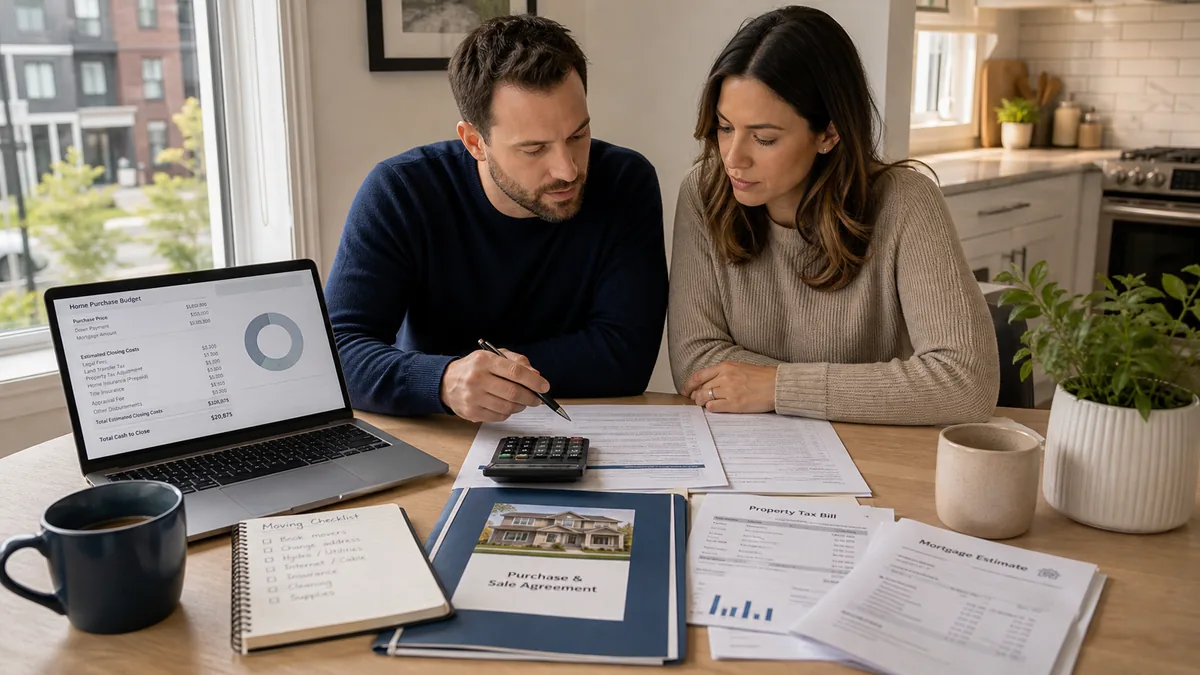
Closing costs are the extra costs buyers pay on top of the down payment when purchasing a home. In Ottawa, these can include Ontario land transfer tax, legal fees, title insurance, property tax adjustments, inspection costs, insurance, moving expenses, and condo-related costs if you are buying a condo.
The exact amount depends on your purchase price, property type, lender requirements, lawyer, and whether you qualify for any first-time buyer rebates.
The safest approach is to budget early so closing costs do not become a last-minute surprise.
Quick Answer
Ottawa buyers should budget for closing costs in addition to their down payment. The biggest item is often Ontario land transfer tax, followed by legal fees, title insurance, adjustments, inspections, moving costs, and property-specific expenses. First-time buyers may qualify for a land transfer tax rebate, but eligibility and amounts should be confirmed with a lawyer or mortgage professional before relying on it.
What Are Closing Costs?
Closing costs are the expenses required to complete your purchase.
Your down payment goes toward the purchase price. Closing costs are separate. They cover taxes, legal work, insurance, inspections, adjustments, and practical moving expenses.
Some costs are paid before closing, such as a home inspection. Others are paid through your lawyer at closing. Some happen immediately after moving in.
If you only save for the down payment, you may feel squeezed at the end of the process.
Ontario Land Transfer Tax
Ontario land transfer tax is often the largest closing cost for Ottawa buyers.
The amount is based on the purchase price. Because rates and rebate rules can change, use a current Ontario land transfer tax calculator or confirm the amount with your lawyer or mortgage professional.
First-time buyers may qualify for a rebate, depending on eligibility. Do not assume you qualify without checking the rules. Marital status, prior ownership, and other details can matter.
Ottawa buyers do not pay the additional municipal land transfer tax that applies in Toronto. That distinction can matter for buyers comparing Ottawa with Toronto.
Legal Fees And Disbursements
You need a real estate lawyer to close the purchase.
Your lawyer handles title review, mortgage registration, document preparation, fund transfers, and the legal transfer of ownership. Legal costs usually include professional fees plus disbursements, which are expenses the lawyer pays on your behalf.
Ask for an estimate early. Fees can vary depending on the transaction, property type, mortgage complexity, and whether extra legal work is required.
Legal fees may be higher for:
- More complex transactions
- Private sales
- Estate sales
- Rural properties
- Properties with title issues
- Condos requiring additional review
- Rush closings
Title Insurance
Title insurance is commonly arranged through the lawyer.
It can help protect against certain title-related issues, such as fraud, survey problems, title defects, and some issues that were not discovered before closing. It does not replace due diligence, but it is a common part of Ontario real estate closings.
Your lawyer can explain what the policy covers and what it does not.
Home Inspection
A home inspection is usually paid by the buyer, often before the sale becomes firm.
Inspection cost can vary based on the size, age, and type of property. Older homes, larger homes, rural properties, and homes with extra systems may cost more to inspect.
For Ottawa buyers, inspections are especially useful for:
- Older homes
- Homes with basements
- Properties with visible water concerns
- Rural homes
- Renovated homes
- Homes with aging roofs, windows, electrical, or mechanical systems
Depending on the property, you may also consider specialized inspections or tests.
Condo Status Certificate Review
If you are buying a condo, you should review the status certificate package.
This package includes important information about the condo corporation, budget, reserve fund, insurance, rules, legal matters, and unit-specific details.
There is typically a fee to order the status certificate, and your lawyer may charge to review it. This is money well spent because condo documents can reveal issues that are not visible during a showing.
Watch for:
- Low reserve fund concerns
- Fee increases
- Special assessments
- Legal disputes
- Insurance issues
- Rules that affect your intended use
- Parking or locker details
Appraisal Fee
Some lenders require an appraisal to confirm the property's value.
Sometimes the lender covers this cost. Sometimes the buyer pays. Ask your mortgage professional early so you know what to expect.
An appraisal is different from a home inspection. The appraiser is focused on value for lending purposes, not a detailed review of the home's condition.
Property Tax And Utility Adjustments
Adjustments are one of the most commonly misunderstood closing costs.
If the seller has prepaid property taxes, utilities, condo fees, or other expenses beyond the closing date, the buyer may need to reimburse the seller for the buyer's share.
For example, if the seller paid property taxes for a period after the closing date, your lawyer may calculate an adjustment so the buyer reimburses the seller for that period.
These adjustments are normal, but they can surprise buyers who were not expecting them.
Home Insurance
If you are buying a freehold home, your lender will typically require proof of home insurance before closing.
Insurance cost depends on the property, coverage, age, location, systems, and claims history. Older homes, rural homes, homes with certain heating systems, or homes with prior issues may require extra attention.
For condos, you still need unit insurance. The condo corporation's policy does not cover everything inside your unit or your personal liability.
Moving Costs
Moving costs are easy to underestimate.
Your costs may include:
- Movers
- Truck rental
- Packing supplies
- Storage
- Cleaning
- Utility setup
- Mail forwarding
- Time off work
- Furniture or appliance purchases
If you are moving in winter, from a condo, or into a building with elevator bookings, plan earlier.
Immediate Repairs And Setup Costs
The first month in a home can be expensive.
Even a well-maintained property may need:
- Lock changes
- Cleaning
- Paint touch-ups
- Window coverings
- Minor plumbing or electrical repairs
- Appliance replacement
- Furnace servicing
- Filters
- Tools and maintenance supplies
- Snow removal equipment
- Lawn care equipment
Do not drain every dollar at closing if the home will need immediate work.
Rural Property Costs
Rural and semi-rural properties near Ottawa can come with additional costs.
Depending on the property, you may need:
- Well water testing
- Septic inspection
- Propane tank review
- Wood stove or WETT inspection
- Survey review
- Internet setup investigation
- Snow removal planning
- Insurance review
These properties can be wonderful, but the due diligence is different from a typical city home.
New Build Closing Costs
New builds can involve extra closing costs that buyers sometimes underestimate.
Depending on the agreement, costs may include development charges, utility hookups, adjustments, Tarion-related items, upgrades, HST considerations, and other builder charges. New build agreements are different from resale agreements and should be reviewed carefully.
Always have a lawyer review a new build purchase agreement before it becomes firm.
Closing Cost Checklist For Ottawa Buyers
Budget for:
- Land transfer tax
- Legal fees
- Title insurance
- Home inspection
- Appraisal, if required
- Condo status certificate, if applicable
- Property tax adjustments
- Utility adjustments
- Home or condo insurance
- Moving expenses
- Utility setup
- Immediate repairs
- New locks
- Furniture, appliances, or window coverings
Common Mistakes Buyers Make
The biggest mistake is assuming the down payment is the only cash needed.
Another mistake is forgetting adjustments. Even if you know about land transfer tax and legal fees, adjustments can still increase the amount needed at closing.
Some buyers also forget about immediate post-closing costs. A home may close successfully, but if you need appliances, blinds, movers, and repairs in the same month, the budget can get tight.
First-time buyers sometimes rely on rebates without confirming eligibility. Always verify.
FAQ
Are closing costs included in my mortgage?
Usually, buyers need to have closing costs available in addition to the down payment. Speak with your mortgage professional about your specific financing.
What is the biggest closing cost in Ottawa?
For many buyers, Ontario land transfer tax is the largest closing cost. The amount depends on the purchase price and any rebate eligibility.
Do first-time buyers pay land transfer tax in Ontario?
First-time buyers may qualify for a rebate, but eligibility rules apply. Confirm your situation with your lawyer or mortgage professional.
Do Ottawa buyers pay Toronto's municipal land transfer tax?
No. Ottawa buyers pay Ontario land transfer tax, not Toronto's additional municipal land transfer tax.
Do condo buyers have different closing costs?
Yes. Condo buyers should budget for status certificate costs, legal review, condo fee adjustments, and condo insurance.
Should I still budget for closing costs if I have a large down payment?
Yes. Closing costs are separate from your down payment and still need to be planned for.
Final Thoughts
Closing costs are not exciting, but they are important. A strong buying plan includes the down payment, closing costs, monthly ownership costs, and a cushion for repairs after moving in.
Before you make an offer, ask for a realistic estimate based on your price range and property type. That way, when you find the right Ottawa home, the numbers are clear before the pressure is on.