
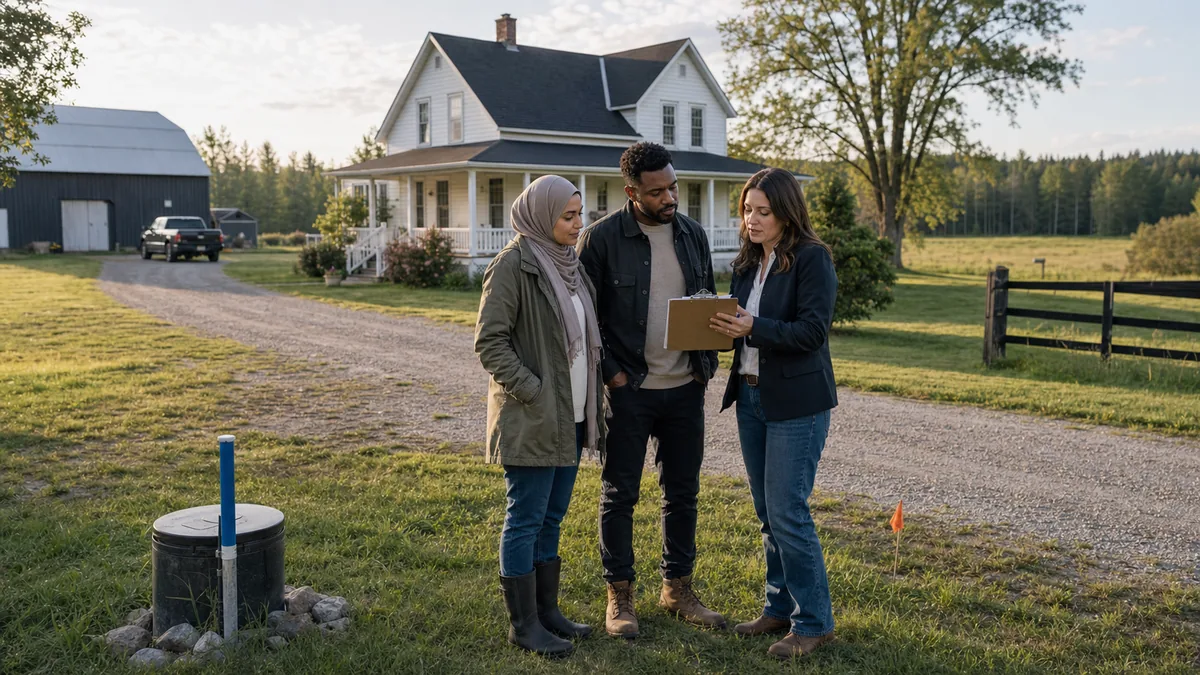
Buying a rural property near Ottawa can be appealing: more space, privacy, larger lots, quieter surroundings, and room to breathe. But rural buying is different from buying a typical city home.
You are not just evaluating the house. You may also be evaluating a well, septic system, zoning, road access, internet, insurance, outbuildings, drainage, and a very different daily routine.
Quick Answer
When buying a rural property near Ottawa, carefully review the well, septic system, water quality, zoning, road access, heating source, internet availability, insurance, outbuildings, drainage, commute, snow removal, and future maintenance costs. Rural properties can be excellent, but they require more due diligence than typical city homes.
Start With Lifestyle Reality
Many buyers love the idea of rural living. Fewer think through the routine.
Before buying, ask:
- How long is the commute in winter?
- Who plows the road and driveway?
- Is high-speed internet available?
- How close are groceries, schools, and healthcare?
- Are you comfortable maintaining land?
- Do you want privacy or just more space?
- Will the property still fit your life in five years?
Rural living can be rewarding, but it is less convenient than city living in ways that matter day to day.
Well Water
Many rural properties use private wells.
Buyers should understand:
- Water quality
- Water quantity
- Well age and type
- Well location
- Water treatment systems
- Maintenance requirements
- Seasonal reliability
Water testing is important. Depending on the property, you may want testing for bacteria, minerals, hardness, nitrates, and other concerns. Ask qualified professionals what is appropriate.
Do not assume clear-looking water is problem-free.
Septic Systems
Private septic systems require careful review.
Ask about:
- Septic age
- Tank location
- Leaching bed location
- Pump-out history
- System capacity
- Records and permits
- Signs of failure
- Restrictions on future additions
A failing septic system can be expensive and disruptive. Septic inspections are often worth the cost.
Zoning And Permitted Uses
Rural properties can have zoning restrictions that affect what you can do.
If you want animals, a home business, severance potential, a secondary dwelling, short-term rental use, workshops, commercial activity, or major additions, investigate before buying.
Do not rely on assumptions. Confirm zoning and permitted uses with the appropriate municipality or qualified professional.
Internet And Cell Service
Internet access is a major issue for rural buyers, especially if you work from home.
Before offering, investigate:
- Available providers
- Actual speeds
- Installation costs
- Reliability
- Cell signal
- Backup options
Ask neighbours when possible. Provider availability maps are useful, but real-world performance matters.
Heating And Fuel
Rural homes may use different heating sources than city homes.
Common considerations include:
- Propane
- Oil
- Wood
- Electric baseboards
- Heat pumps
- Furnaces
- Boilers
- Fireplaces and wood stoves
Review fuel costs, tank ownership, maintenance, insurance implications, and system age.
Wood stoves and fireplaces may require specialized review for insurance purposes.
Insurance
Insurance can be more complicated for rural properties.
Insurers may ask about:
- Heating source
- Wood-burning appliances
- Distance to fire hydrant or fire station
- Roof age
- Electrical system
- Oil tanks
- Outbuildings
- Business use
- Vacancy
Confirm insurability early, especially if the property is older, remote, heated by wood or oil, or includes outbuildings.
Outbuildings And Land
Barns, workshops, sheds, and garages can add value, but they also add responsibility.
Review:
- Structural condition
- Electrical service
- Permits
- Roof condition
- Water intrusion
- Intended use
- Insurance coverage
- Zoning compliance
Land also needs review. Wet areas, drainage, slopes, trees, fencing, and access can all affect how usable the property really is.
Commuting And Winter Access
A rural commute can feel different in February than it does in June.
Test the route. Think about:
- Snow clearing
- Road type
- Driveway length
- School bus access
- Emergency access
- Fuel costs
- Vehicle wear
- Time spent driving
If you need to commute daily, be honest about the tradeoff.
Rural Offer Conditions
Rural offers may need more due diligence than standard city purchases.
Depending on the property, conditions may address:
- Financing
- Inspection
- Insurance
- Well water
- Septic
- Zoning
- Sale of buyer's property
- Lawyer review
The right conditions depend on the property and market conditions. Discuss strategy before offering.
Common Mistakes Rural Buyers Make
One mistake is falling in love with acreage before checking practical systems.
Another is assuming rural means cheaper. Purchase price may be lower than some city areas, but maintenance, commuting, heating, insurance, equipment, and system repairs can add up.
Some buyers underestimate snow removal and land maintenance.
Others skip zoning review and later discover they cannot use the property the way they intended.
Rural Property Checklist
Before buying, understand:
- Well quality and quantity
- Septic condition
- Zoning
- Internet availability
- Heating source
- Insurance
- Road and driveway maintenance
- Outbuilding condition
- Drainage
- Commute
- Utility costs
- Future repair budget
FAQ
Is buying rural near Ottawa cheaper?
Sometimes the purchase price may be lower for more space, but total ownership costs can be higher because of maintenance, heating, commuting, septic, well, and insurance considerations.
Do I need a septic inspection?
It is often wise. Septic systems can be expensive to repair or replace, and a standard home inspection may not be enough.
Should I test the well water?
Yes. Water quality and quantity matter. Testing should be part of your due diligence.
Can I run a business from a rural property?
Maybe. It depends on zoning, municipal rules, property use, traffic, signage, and other factors. Confirm before buying.
Is internet reliable in rural areas near Ottawa?
It depends on the exact property. Always verify provider options and real-world speeds before firming up.
Final Thoughts
Rural properties near Ottawa can offer a lifestyle that city homes cannot. They can also come with systems and responsibilities that many buyers have never managed before.
Buy with curiosity, not assumptions. If the well, septic, zoning, insurance, internet, commute, and maintenance picture all make sense, rural living can be a strong fit.