
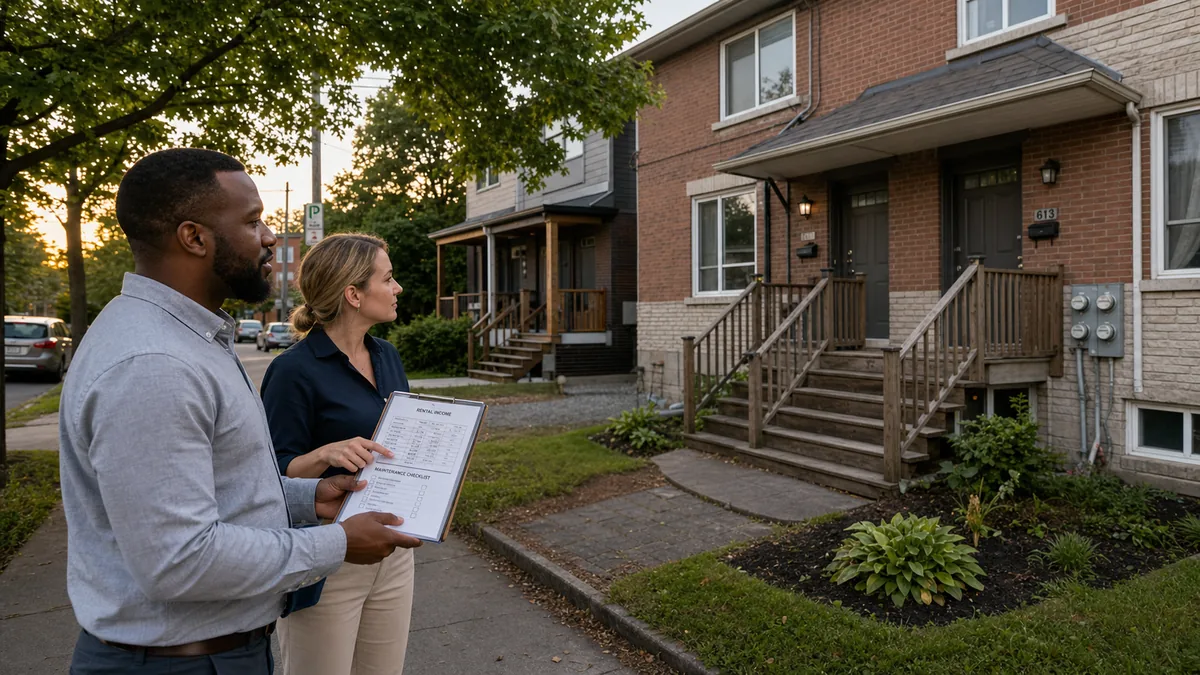
Buying a rental property in Ottawa can be a smart long-term move, but it should be treated like a business decision. The property has to work for tenants, lenders, regulations, maintenance, and your own financial goals.
A good rental is not just a home you personally like. It is a property that makes sense on paper and in real life.
Quick Answer
To buy a rental property in Ottawa, confirm financing, estimate realistic rent, calculate all expenses, choose an area with tenant demand, inspect the property carefully, understand landlord rules, review insurance, and plan for vacancy and repairs. Do not rely on best-case rent or ignore maintenance costs.
Start With Financing
Investment property financing can differ from buying your own home.
Before shopping, ask your mortgage professional about:
- Down payment requirements
- Interest rates
- Rental income treatment
- Debt service ratios
- Closing costs
- Future borrowing capacity
- Personal versus corporate ownership considerations
Financing should be clear before you make an offer.
Estimate Rent Conservatively
Rental income is the foundation of your analysis.
Use realistic rent estimates based on current comparable rentals, not wishful thinking. Consider unit size, parking, laundry, condition, location, utilities, outdoor space, and tenant profile.
If the property only works at an aggressive rent number, it may not be a good investment.
Calculate Full Expenses
Include:
- Mortgage payment
- Property taxes
- Insurance
- Utilities
- Condo fees, if applicable
- Maintenance
- Repairs
- Vacancy allowance
- Property management
- Legal and accounting costs
- Licensing or compliance costs, if applicable
- Capital improvements
A rental property can be cash-flow positive, neutral, or negative depending on price, financing, and expenses.
Choose Tenant-Friendly Locations
Tenants usually care about convenience.
Look for:
- Transit
- Parking
- Grocery stores
- Schools
- Employment access
- Universities or colleges
- Hospitals
- Safety
- Internet availability
- Laundry
Think like the person who will live there.
Pick The Right Property Type
Common rental options include condos, freehold townhomes, detached homes, duplexes, basement suites, and small multi-units.
Condos may be easier to maintain but have fees and rules. Townhomes may attract families. Duplexes offer more than one income stream. Detached homes can appeal to longer-term tenants but may cost more to maintain.
Match the property type to your management capacity.
Inspect Carefully
Repairs reduce returns.
Inspect:
- Roof
- Foundation
- Electrical
- Plumbing
- Heating and cooling
- Windows
- Appliances
- Drainage
- Fire safety
- Renovation quality
For older rentals, consider whether previous work was done legally and safely.
Understand Landlord Responsibilities
Landlords must understand their obligations.
This includes maintenance, tenant rights, lease rules, rent increases, notices, deposits, repairs, and property standards. The rules are not optional.
If you are not willing to learn the landlord side of ownership, consider property management or a different investment.
Plan For Vacancy
Vacancy happens.
Even good properties can sit between tenants, require cleaning, or need repairs before re-renting. Include vacancy in your numbers so one empty month does not derail the investment.
Property Management
Some landlords self-manage. Others hire a property manager.
A manager may help with:
- Tenant placement
- Rent collection
- Maintenance coordination
- Inspections
- Communication
- Emergency calls
This costs money, but it may be worthwhile if you are busy, inexperienced, or live far away.
Exit Strategy
Before buying, know how you would sell.
A property with broad appeal may be easier to exit. A highly specialized rental may only appeal to investors.
Ask who the next buyer would be and why they would want it.
FAQ
Is buying a rental property in Ottawa a good idea?
It can be, but only if the numbers, location, condition, financing, and management plan make sense.
Should I buy a condo as a rental?
Condos can work, but fees, rules, reserve fund, special assessments, and rental demand must be reviewed.
How much vacancy should I budget for?
Use a conservative vacancy allowance based on property type and tenant demand. Do not assume the unit will be occupied every day forever.
Do I need a property manager?
Not always, but it can help if you do not have time or experience to manage tenants and repairs.
What is the biggest mistake new landlords make?
Many underestimate expenses and overestimate rent. Conservative numbers are safer.
Final Thoughts
Rental properties reward careful analysis. If the rent, expenses, condition, financing, and tenant demand all make sense, Ottawa can offer solid long-term opportunities.
Buy the numbers first. Like the property second.